You flip on the bathroom light late at night, or head down to the basement for a box, and something with a lot of long legs races across the floor and disappears under a cabinet. For many homeowners, that is their first encounter with a house centipede.
It is an unsettling sight, but it is rarely a sign of a serious problem. A house centipede sighting does not automatically mean a major infestation or any kind of structural issue. More often, it tells you something about moisture in that part of the house. This guide covers how to recognize a house centipede, why it showed up, and what you can reasonably do about it.
How to Identify a House Centipede
The house centipede, Scutigera coleoptrata, is one of the easier household arthropods to recognize once you know what to look for. According to Washington State University Extension, key features include:
- Size and shape: a slender, flattened, elongated body roughly 1 to 1½ inches long.
- Striped body: grayish-yellow, with three dark stripes running down the back.
- Long, slender legs: adults have 15 pairs, and they look long and fragile compared with the body.
- Long antennae: the antennae, along with the last pair of legs, are longer than the body itself.
- Fast movement: they run quickly, holding the body up on those long legs, and are mostly active at night.
House centipedes vs. millipedes
The two are often confused, but Colorado State University Extension points out a few clear differences. Centipedes have one pair of legs per body segment, while millipedes appear to have two pairs on most segments. Millipedes are rounder, slower, and tend to curl into a tight coil when disturbed or dead. Centipedes are far more active, and the house centipede in particular is quick.
It is also worth knowing that not every centipede is a house centipede. CSU describes other types, such as stone centipedes and the much larger giant desert centipede, which look quite different. If what you found has short legs and a dark, segmented body, it is likely something else. Our centipede pest page has a broader overview of centipedes in general.
Why House Centipedes Appear Indoors
Three things tend to bring house centipedes into a home and keep them there:
- Moisture: house centipedes prefer damp areas, and Extension sources describe centipedes in general as susceptible to drying out.
- Shelter: dark, undisturbed hiding places such as storage boxes, gaps behind fixtures, and cluttered corners.
- Prey: they hunt spiders and small insects, so a space with other bugs offers a food supply.
It might seem like Pueblo's dry climate would rule this out, but damp conditions can exist inside a home regardless of the weather outside. A slow plumbing leak, a bathroom without good ventilation, condensation on cold-water pipes, or a basement that stays humid can all create small pockets of moisture that suit them well.
Where You May Find Them
House centipedes tend to show up in the same kinds of spaces:
- Bathrooms, especially around tubs, showers, and sinks
- Basements
- Crawl spaces
- Laundry and utility areas
- Around plumbing leaks and sweating pipes
- Storage areas with damp cardboard or clutter
CSU notes that centipedes are often found in the morning trapped in bathtubs or wash basins. That can make it seem like they came up the drain, but finding one in a tub or sink does not prove it. Smooth porcelain is hard to climb, so a centipede that wanders in during the night may simply be unable to get out.
Are House Centipedes Dangerous or Destructive?
Extension guidance generally treats house centipedes as nuisance predators. They feed on other small arthropods, not on wood, fabric, or stored food, so they are not considered wood-destroying pests and do not cause structural damage.
Like all centipedes, they do have jaws. WSU notes that a house centipede may inflict a painful bite if handled, and CSU describes bites as extremely rare, generally happening only when a centipede is picked up or crushed. The practical takeaway is simple: do not handle them with bare hands. If you have concerns about a bite or a reaction, contact a medical professional.
One more reassurance from CSU: a startled centipede sometimes runs toward a person entering a room, which can look like an attack. It is not; it is just trying to get away.
Does Seeing a Centipede Mean I Have Cockroaches?
Not necessarily. House centipedes eat a wide range of small arthropods, including spiders, flies, moths, and cockroaches. A single sighting does not prove that any one of those is present in large numbers.
That said, recurring or numerous sightings can be a useful prompt to look at the bigger picture: moisture conditions, entry points, and whether other insects are active. If you are seeing signs of roaches as well, our guide to cockroaches in Pueblo and Fremont counties explains what to look for. House centipedes are not a substitute for dealing with an actual pest infestation.
Practical Ways to Reduce House Centipede Activity
CSU and WSU both point to moisture control as the main approach, along with making the home less inviting for the insects centipedes feed on. Practical steps include:
- Repair leaks under sinks, around toilets, and along exposed plumbing.
- Improve ventilation in bathrooms, and provide adequate ventilation in crawl spaces.
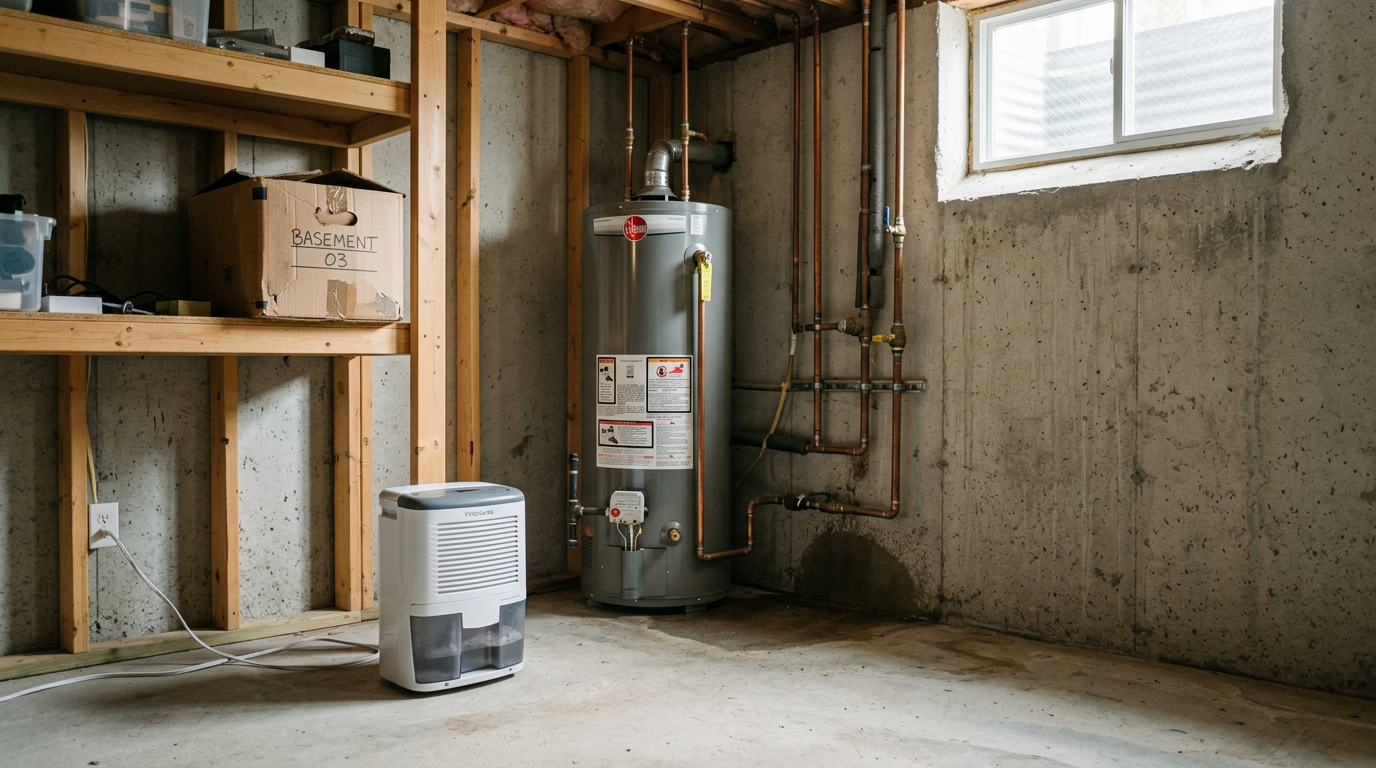
- Use a dehumidifier in basements or other spaces that stay damp.
- Reduce damp clutter, especially cardboard boxes stored on basement floors.
- Seal accessible gaps and keep window screens and door sweeps in good repair.
- Keep damp leaves and debris away from the foundation so the area right against the house dries out.
- Address confirmed prey-pest problems, so there is less for centipedes to hunt indoors.
An occasional centipede can simply be removed, and WSU suggests a vacuum works well. There is no need to treat an entire home over a single sighting, and CSU specifically does not recommend interior insecticide applications for centipedes. Please do not pour bleach, pesticides, or other chemicals down drains; it will not address the moisture that attracted the centipede and can create its own hazards.
Many of these steps overlap with general seasonal sealing. Our fall pest prevention guide covers gaps, door sweeps, and foundation upkeep in more detail.
When to Request Help
Most house centipede sightings can be handled with the steps above. It may be worth reaching out when:
- You keep seeing centipedes despite drying out the area.
- There is a moisture problem you have not been able to track down or resolve.
- You are not sure what you found, or whether it is a house centipede at all.
- You are also noticing signs of other pests, such as cockroaches or spiders.
We work with homeowners across Pueblo County, including Pueblo and Pueblo West, as well as eastern Fremont County, including Cañon City, Florence, and Penrose.
Seeing recurring centipede activity or unsure what you found? Contact Pueblo Pest Control to discuss your situation and available service options.
Frequently Asked Questions About House Centipedes
Why am I finding centipedes in my bathroom?
Bathrooms tend to be among the dampest rooms in a house, and house centipedes favor damp areas. Steam from showers, a slow leak under a sink, or a poorly ventilated room can all create the conditions they look for. Small insects drawn to the same moisture can also give them something to hunt.
Do house centipedes damage wood?
No. House centipedes feed on small insects, spiders, and other arthropods rather than on wood, and they are not considered wood-destroying pests. If you are also seeing damaged wood, that is a separate issue worth looking into on its own.
Does one house centipede mean an infestation?
Not usually. Extension guidance notes that indoor centipede problems typically involve only a few individuals. One sighting is generally not a cause for alarm. Repeated sightings over time are a better reason to check for moisture problems and other insect activity.
Do house centipedes come up through drains?
Finding one in a sink or tub does not prove it came through the drain. Centipedes are commonly found trapped in tubs and basins, and smooth porcelain is hard for them to climb out of. It is more likely that the centipede wandered in and could not get back out.
Can reducing moisture help?
Yes. Moisture control is the main recommendation in university Extension guidance. Fixing leaks, improving ventilation, and running a dehumidifier in damp spaces like basements make a home less hospitable to house centipedes and to the insects they feed on.
Seeing Recurring Centipede Activity?
If you keep finding centipedes or are unsure what you found, contact Pueblo Pest Control to discuss your situation and available service options.