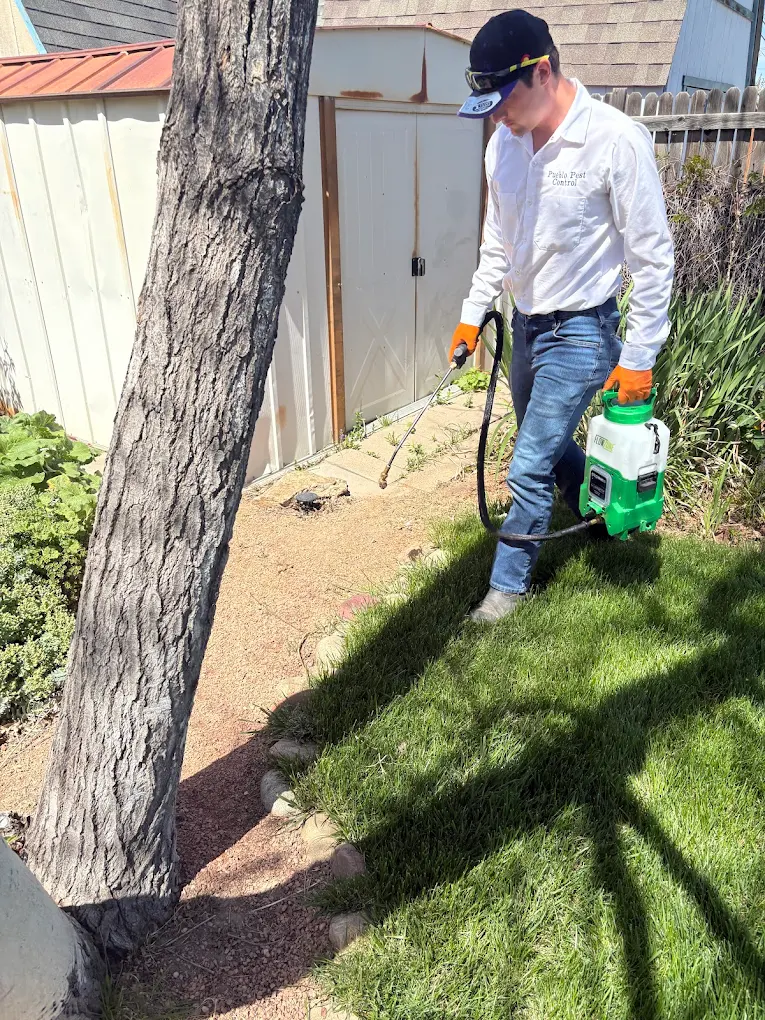
Every fall, the pest problems around Pueblo homes change character. The insects that spent the summer in the yard start looking for somewhere to spend the winter, and the warm, dry, protected space they settle on is often inside your house.
The upside is that fall pest activity is unusually predictable. Cooling nights drive pests toward shelter, they tend to use the same handful of entry points, and a few hours of work in September can save you from dealing with mice in your pantry in January.
Why Fall Is the Turning Point for Pests
Southern Colorado gets sharp temperature swings in autumn. Afternoons can still feel like summer while overnight lows drop well down, and that gap is exactly what pushes pests to move. Insects and rodents that were comfortable outdoors suddenly need somewhere stable.
Homes in Pueblo West, Florence, Penrose, and Cañon City east of the Royal Gorge Bridge all see this shift. Sunny south- and west-facing walls hold heat late in the day, which is why you will often notice bugs clustering there before they find a way in.
This is also why fall prevention is so much more effective than fall treatment. Once a pest is established in a wall void or attic, you are solving a harder problem than if you had closed the gap in the first place.
Which Pests Move Indoors in Autumn
Not every pest behaves the same way as it cools off. In this region, the fall arrivals usually fall into a few groups:
- Mice and other rodents: The most consequential fall pest. They are actively hunting for winter shelter and food, and they can use openings much smaller than people expect.
- Elm seed bugs: A familiar nuisance on the Front Range and in southern Colorado. They gather on warm exterior walls in large numbers and slip in through gaps around windows and siding.
- Spiders: More noticeable in garages, basements, and storage areas as they follow the insects that are also moving inside.
- Wasps: Late-season colonies get more aggressive around food as they break down, and queens look for protected spots to overwinter.
- Crickets and roaches: Both drift toward warmth and moisture, which often means basements, crawl spaces, and utility rooms.
Rodents deserve the most attention, simply because the consequences are larger. A mouse that gets in during October is not just a nuisance, it can contaminate food, chew wiring and insulation, and reproduce through the winter while you are unaware.
Where Pests Actually Get In
When you walk your home looking for entry points, it helps to know where they usually are rather than scanning the whole exterior at random. The recurring problem areas are:
- Utility penetrations: Gaps where pipes, gas lines, electrical conduit, and cable enter the wall are among the most common ways in.
- Door sweeps and weather stripping: Worn or missing seals leave a clear gap at the threshold, especially on garage and side doors.
- Garage door corners: The bottom corners rarely seal tightly, and garages connect directly to living space.
- Vents and dryer exhausts: Missing or damaged covers turn a vent into an open door.
- Window and siding gaps: Small separations around frames and trim are the main route for elm seed bugs and other small insects.
- Foundation cracks: Even hairline cracks widen over time and give insects a protected path inside.
- Roofline and soffit gaps: Worth checking because rodents climb well, so ground level is not the whole story.
Your Fall Pest Prevention Checklist
You do not need specialized equipment for most of this. Work through the exterior first, then the areas just inside:
- Seal gaps with the right material: Use caulk for small cracks around windows and trim, and something more durable like steel wool packed with sealant for openings a rodent could chew through.
- Replace worn door sweeps and weather stripping: If you can see daylight under a closed door, a mouse can use it.
- Screen and cover vents: Make sure dryer vents, crawl space vents, and attic vents have intact covers or screening.
- Move wood piles away from the house: Stacked firewood against the siding is ideal harborage. Keep it well away from the foundation and off the ground.
- Trim back vegetation: Branches and shrubs touching the house act as a bridge. Leave a clear gap between plantings and siding.
- Clear leaf litter and debris: Damp piles against the foundation shelter insects, which in turn attract the things that eat them.
- Manage moisture: Clean gutters, direct downspouts away from the foundation, and fix leaks. Moisture draws far more pests than most homeowners realize.
- Store food and pet food in sealed containers: This matters most in garages, pantries, and basements where rodents forage.
- Check what you bring inside: Firewood, boxes from storage, and holiday decorations can all carry pests in with them.
If you only do two things, seal the utility penetrations and fix the door sweeps. Those two account for a large share of the entry points we find on fall inspections.
Signs Pests Are Already Inside
Prevention is the goal, but it is worth knowing what an established problem looks like so you do not spend the winter unaware:
- Droppings in cabinets, drawers, along walls, or in the garage
- Gnaw marks on food packaging, baseboards, or wiring
- Scratching or scurrying sounds in walls or ceilings, usually at night
- Shredded paper, insulation, or fabric gathered in hidden corners
- Insects clustering repeatedly at the same window or light fixture
- A persistent musty or unusual odor in an enclosed space
Any of these means the entry point is already open and something is using it. At that stage, sealing alone is not enough, because you can trap the problem inside rather than shut it out.
When to Bring in a Professional
Plenty of fall prevention is straightforward homeowner work. It makes sense to get help when:
- You are seeing the signs above and suspect something is already established indoors.
- You cannot locate the entry point even though pests keep appearing.
- The same problem returns every fall despite your prevention efforts.
- The access points are in difficult or unsafe places, like a steep roofline or a tight crawl space.
- You are dealing with active wasp nests near doorways or high-traffic areas.
A professional inspection is largely about finding what is easy to miss. We look at the whole structure, identify the openings that matter, and help you prioritize the ones worth addressing before winter sets in.
Fall Pest Control in Pueblo County and Eastern Fremont County
At Pueblo Pest Control, we help homeowners get ahead of the seasonal shift rather than react to it. We serve Pueblo County and eastern Fremont County, including Pueblo West, Cañon City east of the Royal Gorge Bridge, Florence, and Penrose.
If you would rather not spend another winter chasing mice out of the garage, request a free quote and we will take a look at where your home is most vulnerable. You can also browse our pest library to identify what you have been seeing.
Frequently Asked Questions About Fall Pest Prevention
Why do pests come inside in the fall?
As nights cool down in Pueblo and eastern Fremont County, pests that spent the summer outdoors start looking for somewhere warm, dry, and protected to spend the winter. Your home offers all three. Cooling temperatures are the trigger, which is why activity around doors, windows, and the foundation often picks up noticeably in September and October.
What pests are most common in Pueblo homes in the fall?
Mice and other rodents looking for winter shelter, elm seed bugs and other overwintering insects gathering on sunny walls, spiders moving into garages and basements, and late-season wasp activity as colonies break down. Crickets and roaches also tend to move toward warmth and moisture indoors as it cools.
When should I start fall pest prevention?
Late summer through early fall is ideal, before the first real cold snap pushes pests toward your home. Sealing gaps and clearing harborage in September is far easier than dealing with an established indoor problem in December, though it is still worth doing whenever you get to it.
How do mice get into a house?
Mice can use surprisingly small openings, including gaps around utility penetrations, dryer vents, garage door corners, and worn weather stripping. Because they are excellent climbers, entry points are not limited to ground level, which is why a careful look at the whole exterior matters.
Do you provide fall pest control in eastern Fremont County?
Yes. Pueblo Pest Control serves Pueblo County and eastern Fremont County, including Pueblo West, Cañon City east of the Royal Gorge Bridge, Florence, and Penrose. If you want help getting ahead of pests before winter, we can take a look at your property and talk through what makes sense.
Get Ahead of Pests Before Winter
Fall is the best window to seal up your home. If you want help finding the gaps that matter around your Pueblo, Pueblo West, or eastern Fremont County home, request a free quote and we'll take a closer look.