Few pests get a homeowner's attention quite like a black widow. Moving a stack of firewood or reaching into a dim corner of the garage and spotting a glossy dark spider is unsettling, and it raises immediate questions about safety.
Black widows do well in the dry, warm conditions of southern Colorado, and homeowners in Pueblo and eastern Fremont County do encounter them. This guide covers how to recognize them, where they hide, how to work safely around suspected areas, and what professional spider control can realistically accomplish.
Black Widow Identification
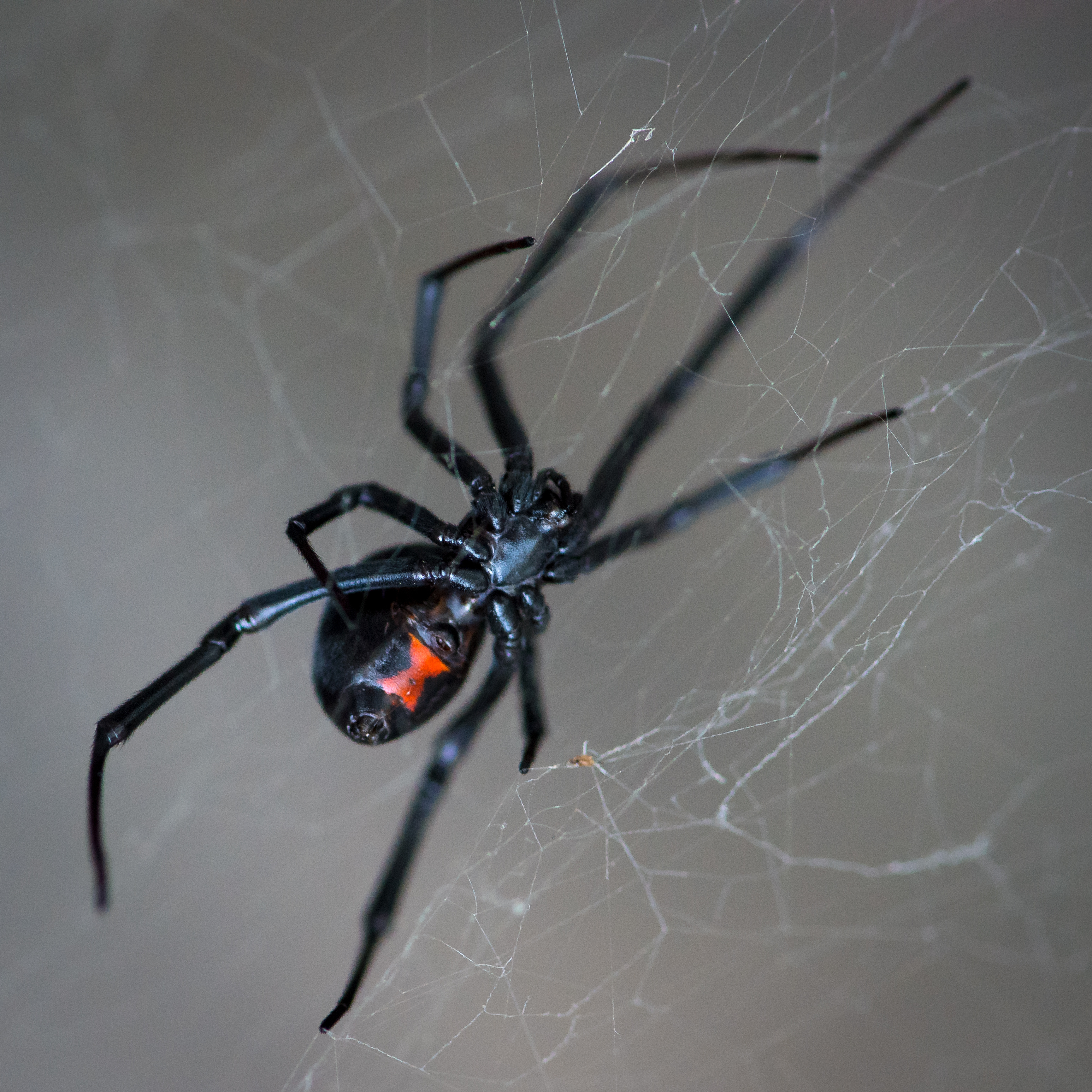
The widow spider you are most likely to encounter in this region is the western black widow (Latrodectus hesperus), which occurs throughout Colorado. Mature females are the ones most people picture:
- A dark, rounded, glossy abdomen.
- The characteristic red or red-orange hourglass marking on the underside of the abdomen.
- Females are the larger sex, with a body roughly half an inch long, not counting legs.
- Irregular, tangled webs built low to the ground in dark, undisturbed places.
- Largely nocturnal, so they are most active at night.
Markings vary more than people expect
The hourglass is a useful field mark, but it is not perfectly consistent. It can appear as two separated triangles rather than a joined hourglass, and the color ranges from bright red toward orange. Males and immature spiders look different from mature females and are commonly misidentified.
Look-alikes
The harmless false black widow (Steatoda grossa) is a frequent source of confusion. It lacks the red hourglass and generally has a less glossy body. Because look-alikes exist in both directions, it is safest to treat any dark spider in a tangled web with caution rather than trying to make a confident call up close.
Please do not handle a spider to inspect it. The marking sits on the underside, so checking it usually means flipping or trapping the spider, which is exactly the wrong thing to do. Photograph it from a safe distance instead, or leave the area undisturbed and have someone look at it.
Where Black Widows Hide
Widows favor dark, quiet, undisturbed places, typically low to the ground and sheltered from wind. Around a home, that often means:
- Garages
- Sheds and outbuildings
- Basements and crawl spaces
- Wood piles and stacked lumber
- Rock piles and rock landscaping
- Storage areas and rarely opened boxes
- Window wells
- Outdoor furniture and grills, especially seldom-used pieces
- Under stairs, decks, and eaves
- Around water heaters, furnaces, and utility closets
- Clutter and retaining walls near the foundation
Why southern Colorado yards suit them
The dry, warm conditions and the landscaping common in this part of the state work in their favor. Rock beds, block walls, xeric plantings, detached garages, and sheds all create exactly the sheltered, undisturbed voids widows prefer. They often live outdoors and move closer to structures during extreme weather. Anything left untouched for months is worth approaching carefully.
Why Black Widows May Appear Around a Home
Widows are not seeking people out. They are looking for a protected place to anchor a web and a reliable supply of prey insects. Several conditions can make a property more inviting:
- Insect prey: a property with active insect populations offers steady food.
- Outdoor lighting: exterior lights draw insects at night, which in turn attracts predators.
- Clutter and debris: undisturbed piles create ideal web anchor points.
- Cracks and gaps: openings around the foundation, doors, and utilities allow movement toward and into structures.
- Sheltered structures: garages, sheds, crawl spaces, and deck framing provide protection from weather.
Signs of Black Widow Activity
Widow webs do not look like the neat wheel-shaped webs many people picture. Watch for:
- Irregular, tangled webs rather than an organized circular pattern, often strong and slightly gritty in texture.
- Spiders or egg sacs tucked into dark, protected places. Egg sacs are typically rounded and papery.
- Insect prey remains caught in or near the web.
- Repeated activity in the same undisturbed area, which suggests conditions there suit them well.
Safety Guidance
If you suspect widow activity, a few sensible habits go a long way:
- Do not handle spiders or egg sacs, even ones that appear dead or abandoned.
- Wear heavy gloves and long sleeves when moving firewood, working in storage areas, or reaching into crawl spaces and window wells.
- Shake out gloves, shoes, clothing, towels, and stored items before putting them on or bringing them inside.
- Keep children and pets away from areas where you have seen activity until it has been addressed.
- Seek appropriate medical advice after a suspected medically significant bite, or if concerning symptoms develop.
One point worth stating plainly: a bite cannot be reliably identified from how a mark looks. If you are worried about a bite, or if the person bitten is a child, an older adult, or someone with health concerns, contact a medical professional. We are pest control professionals, not medical providers, so we will not offer treatment guidance beyond that recommendation.
Prevention
You cannot remove every widow from an outdoor space, but you can substantially reduce encounters. Prevention works best when it addresses both shelter and food supply:
- Seal gaps around the foundation, doors, windows, and utility penetrations, and screen vents.
- Repair screens and door sweeps, including weatherstripping on garage doors.
- Reduce clutter and debris, particularly boxes and stored items in garages, sheds, and along the foundation.
- Move wood piles away from the structure and keep them raised where practical.
- Trim vegetation where it crowds the foundation or walls.
- Remove webs only when it can be done safely, using a vacuum or long-handled tool rather than a bare hand.
- Rethink exterior lighting. Constant outdoor lighting attracts the insects widows feed on, so use motion-activated fixtures or less insect-attracting bulbs rather than leaving lights on all night.
- Inspect stored items before carrying them indoors, especially boxes and gear that have sat in a shed or garage.
Professional Black Widow Control
Inspection and careful physical removal are effective tools when performed safely. A professional can check the low, dark, awkward spaces most homeowners would rather not reach into, and can remove spiders and egg sacs properly. Our approach includes:
- Inspection: identifying widow activity and the higher-risk areas around your home.
- Physical removal: safely clearing spiders, webs, and egg sacs that are present.
- Targeted exterior treatment: focused applications around foundations, garages, and entry points to help reduce migration into the structure.
- Exclusion: addressing the gaps and harborage that let spiders get close in the first place.
- Follow-up: ongoing visits through our Home Protection Plan to catch renewed activity.
We will be straightforward about the limits: no treatment eliminates every spider permanently or guarantees that another widow will never appear in your yard. What a good plan does is remove what is present, reduce the population, and make the structure less inviting. Widows do play a role in controlling other insects, so the goal is managing them where they are too close to your home rather than sterilizing the landscape.
Related Reading
Because widow activity often overlaps with other pest pressure, these articles may also help:
- Scorpions in the Pueblo Area, another pest that shelters in rock piles, wood piles, and clutter.
- Acrobat Ants in Pueblo and Eastern Fremont County, for insect activity around foundations and rooflines.
- Fall Pest Prevention in Pueblo, covering the sealing and exclusion work that keeps pests out.
Black Widow and Spider Control in Pueblo County and Eastern Fremont County
Pueblo Pest Control provides spider control throughout Pueblo County and eastern Fremont County, including Pueblo, Pueblo West, Cañon City east of the Royal Gorge Bridge, Florence, and Penrose.
If you have found a black widow around your home, or you would rather not reach into that crawl space yourself, request a quote and we will take a look.
Frequently Asked Questions About Black Widow Spiders
Do black widow spiders live in Pueblo, Colorado?
Yes. Western widow spiders occur in Colorado, and homeowners in the Pueblo area sometimes find them in dark, undisturbed spots around the outside of a home. Garages, sheds, crawl spaces, wood piles, rock piles, and window wells are among the places they turn up.
How do I identify a black widow spider?
Mature females are typically dark with a rounded, glossy abdomen and a red or red-orange hourglass marking on the underside. Markings can vary in shape, completeness, and color, and males and juveniles look different from mature females. Never handle or flip a spider to check for the marking.
What is the difference between a black widow and a false widow?
The false black widow is a similar-looking spider that lacks the red hourglass marking and generally appears less glossy. Because look-alikes exist, treat any dark spider in a tangled web with caution rather than trying to make a positive identification up close.
What should I do if I think I was bitten by a black widow?
Seek appropriate medical advice, particularly if concerning symptoms develop or the person bitten is a child, an older adult, or someone with health concerns. We are pest control professionals rather than medical providers, and a bite cannot be reliably identified from how a mark looks.
Can black widows be eliminated completely?
We would not promise that. Inspection, careful physical removal, targeted exterior treatment, and exclusion can meaningfully reduce activity and lower the chance of spiders moving into the structure, but no treatment guarantees another spider will never appear in a yard.
Do you provide spider control in eastern Fremont County?
Yes. Pueblo Pest Control serves Pueblo County and eastern Fremont County, including Pueblo, Pueblo West, Cañon City east of the Royal Gorge Bridge, Florence, and Penrose.
Found a Black Widow Around Your Home?
Don't handle it yourself. Pueblo Pest Control serves Pueblo County and eastern Fremont County, and we can inspect, remove, and help keep spiders out.