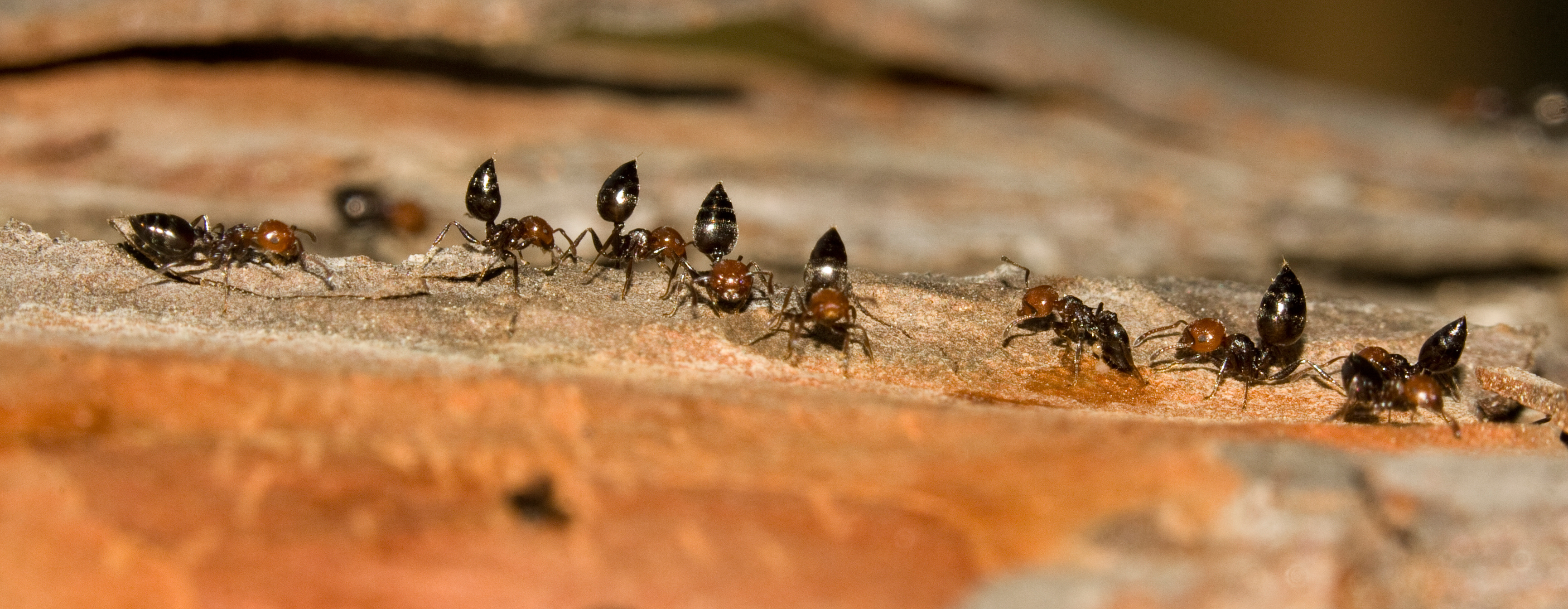
If you have found small ants trailing along a roofline, around a window, or near a piece of damp wood, you may have run into acrobat ants. They are one of several ants that can show up around homes and structures in southern Colorado, and they are easy to mistake for other species.
This guide walks through what acrobat ants are, where they tend to nest, what draws them in, and when it makes sense to bring in a professional. For a broader look at ants in general, you can also read our ant control page.
What Are Acrobat Ants?
Acrobat ants belong to the genus Crematogaster. Their common name comes from a distinctive habit: when they are disturbed, workers often raise or hold their abdomen up over the thorax, almost like a small gymnast balancing overhead.
That behavior is a helpful clue, but it is not a guarantee. Identifying ants accurately usually takes a close look at the insect itself along with where it is nesting and how it is behaving.
A note of caution: please do not rely on a photo alone. Many ants look broadly similar at a glance, and photos taken on a phone rarely show the details that separate one species from another. If the identification matters, it is worth having someone look at the ants and the nesting site in person.
What Do Acrobat Ants Look Like?
Acrobat ants are generally small to medium-sized ants. Depending on the species, they may appear brown, reddish-brown, or considerably darker, and some have a two-tone look where parts of the body differ in color.
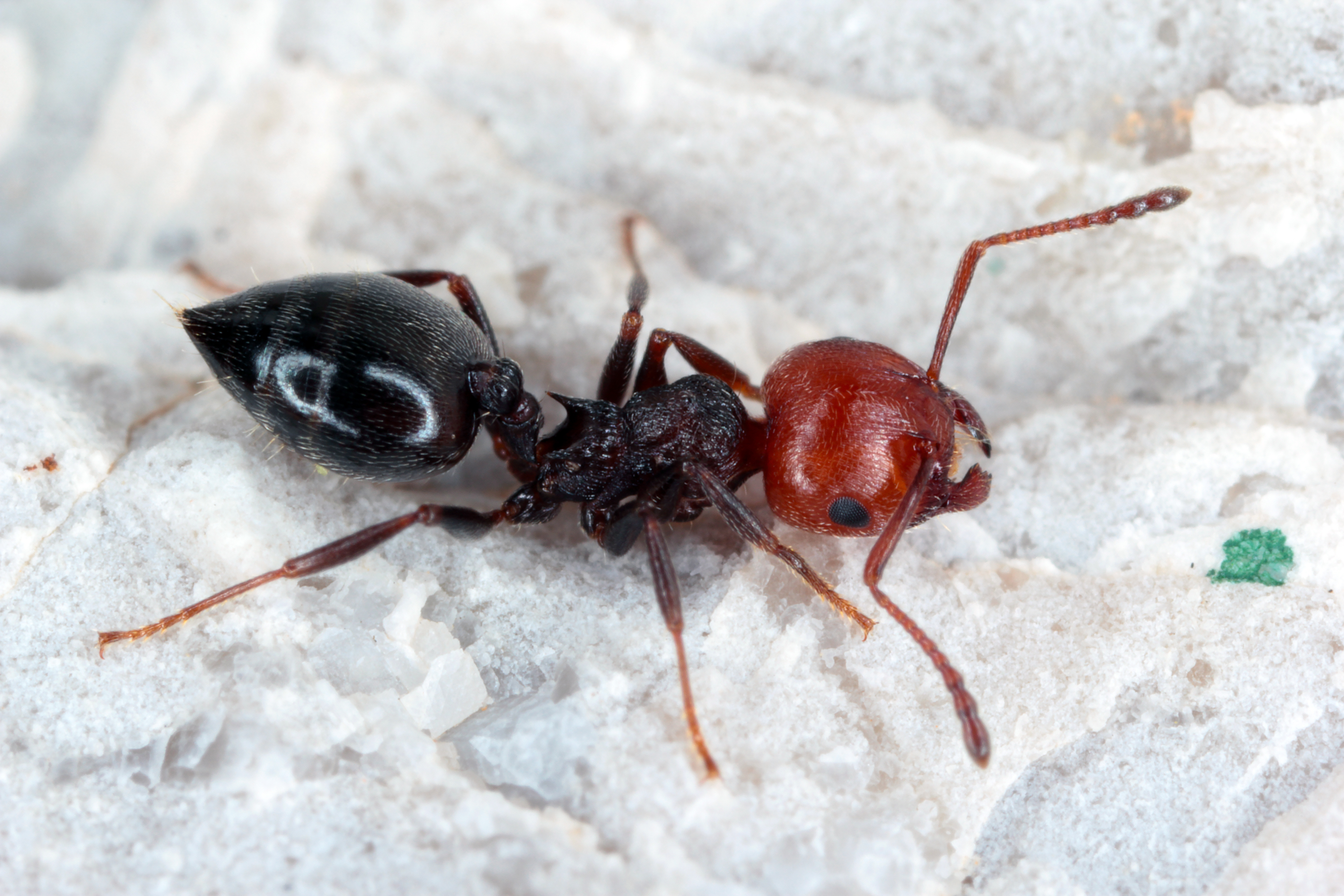
Why color alone is not enough
Because appearance varies between species, color by itself is an unreliable identifier. In practice, three things together give a much better answer:
- Body shape: the overall form of the ant, viewed closely.
- Behavior: whether workers lift the abdomen when disturbed.
- Nesting location: where the colony is actually living.
We would rather describe acrobat ants cautiously than give you a precise measurement or an exact local species that cannot be verified for your specific property.
Where Acrobat Ants May Be Found Around Pueblo Homes
Acrobat ants are often associated with wood and with protected cavities. Around a home in Pueblo County or eastern Fremont County, possible nesting and travel areas include:
- Tree branches and damaged or decaying wood
- Wall voids
- Rooflines and eaves
- Insulation
- Utility penetrations where pipes or wires enter the structure
- Mulch, wood piles, and landscape debris
- Areas near moisture problems or existing structural damage
An important distinction: finding ants outdoors does not automatically mean there is an infestation inside your home. Ants foraging in mulch or on a tree are doing what ants do. What matters more is whether they are moving into the structure, and why.
Signs of an Acrobat Ant Problem
Rather than a single dramatic sign, an acrobat ant problem usually shows up as a pattern. Things worth paying attention to include:
- Trails near windows, doors, rooflines, or along utility lines
- Ants entering through cracks and small gaps
- Activity around damaged or damp wood
- Ants appearing indoors repeatedly, especially in the same spot
- Small piles of debris or nesting material near structural openings
- Defensive behavior when a trail or nest is disturbed, including the raised abdomen
One ant on a windowsill is not a crisis. A trail that keeps reappearing in the same place is worth investigating.
What Attracts Acrobat Ants?
There is rarely one single cause. Several conditions can contribute, and different properties have different combinations:
- Food sources: accessible food indoors and out, including sweets and residue.
- Moisture: leaks, poor drainage, and damp materials.
- Protected nesting spots: wall voids, insulation, and hollow spaces.
- Damaged wood: wood softened by moisture or previous damage is easier to nest in.
- Vegetation touching the structure: branches and shrubs that act as bridges to the roofline.
- Other insects: insect activity on the property can contribute to overall pest pressure.
Because the mix varies, it is a mistake to assume that whatever caused a neighbor's ant problem is the same thing causing yours.
Why Spraying the Ants You Can See May Not Solve It
It is a natural instinct to treat the ants in front of you. The trouble is that visible workers are often simply commuting: traveling between the colony and a food, water, or nesting site somewhere else.
Removing the foragers does not necessarily change the conditions that brought them there. That is why the trail often reappears within days.
A professional inspection is aimed at the parts you cannot see: locating entry points, finding moisture or damaged wood, and working out where the colony is actually living. That fuller picture is what makes a plan effective rather than repetitive.
We also want to be clear that we will not offer do-it-yourself pesticide instructions here. Product choice, placement, and application matter a great deal for safety, particularly in homes with children or pets. Always follow label directions on any product you use, or have a licensed professional handle it.
Prevention Tips
Prevention is about making your home harder to enter and less appealing to nest in. Practical steps include:
- Seal cracks and utility openings where pipes, wires, and vents pass through walls.
- Repair leaks and moisture damage promptly, including damp or softened wood.
- Trim vegetation away from the structure so branches and shrubs are not touching siding or the roof.
- Move wood piles and debris away from the home rather than stacking them against the foundation.
- Reduce mulch and clutter directly against the foundation to limit sheltered nesting space.
- Inspect rooflines, eaves, windows, and doors periodically for gaps and worn seals.
- Avoid disturbing ant nests you cannot identify, since some ants become defensive when their nest is disrupted.
When to Call a Pest Professional
Consider reaching out for professional help when:
- You are seeing recurring ant trails indoors.
- Ant activity is near damaged, damp, or decaying wood.
- Activity is concentrated around rooflines, eaves, or wall voids you cannot access.
- The problem returns after do-it-yourself treatment.
- You are not confident about what species you are dealing with.
Ants near damaged wood deserve particular attention, because the ants and the moisture or wood problem often need to be addressed together.
Ant Control in Pueblo County and Eastern Fremont County
At Pueblo Pest Control, we help homeowners work out which ant they actually have and what is drawing it to the property. We serve Pueblo County and eastern Fremont County, including Pueblo, Pueblo West, Cañon City east of the Royal Gorge Bridge, Florence, and Penrose.
If ants keep coming back around your home, request a quote and we can take a closer look at the trails, the entry points, and the conditions behind them.
Frequently Asked Questions About Acrobat Ants
How do I know if I have acrobat ants?
Acrobat ants are named for a behavior rather than a color: when disturbed, workers often raise or hold the abdomen up over the thorax. That habit is a useful clue, but it is not proof on its own. Several ant species can look similar to the naked eye, so a close inspection of the ants and where they are nesting is the reliable way to tell what you are dealing with.
Are acrobat ants the most common ant in Pueblo?
We would not claim that. Acrobat ants are one of several ants that may turn up around homes and structures in this part of Colorado. Identifying which ant you actually have matters, because nesting habits and the right approach differ from species to species.
Does seeing ants outside mean I have an infestation indoors?
No. Ants foraging outdoors along a sidewalk, in mulch, or on a tree are a normal part of the landscape. What is more meaningful is repeated indoor activity, trails coming in through a consistent gap, or ants showing up near damp or damaged wood.
Why do the ants come back after I spray them?
The workers you see are often just the visible part of the picture, traveling between a nest and a food or moisture source. Treating only the ants in view may not address where they are actually living or how they are getting in, which is why activity can return.
Do you provide ant control in eastern Fremont County?
Yes. Pueblo Pest Control serves Pueblo County and eastern Fremont County, including Pueblo, Pueblo West, Cañon City east of the Royal Gorge Bridge, Florence, and Penrose.
Dealing With Ants That Keep Coming Back?
If ant trails keep returning around your Pueblo, Pueblo West, or eastern Fremont County home, we can help you identify what you are dealing with and what is drawing them in.